How to play
BS
Also known as Cheat, I Doubt It, Bullshit.
- Players
- 3–6
- Play time
- 15 min
- Difficulty
- Easy–Medium
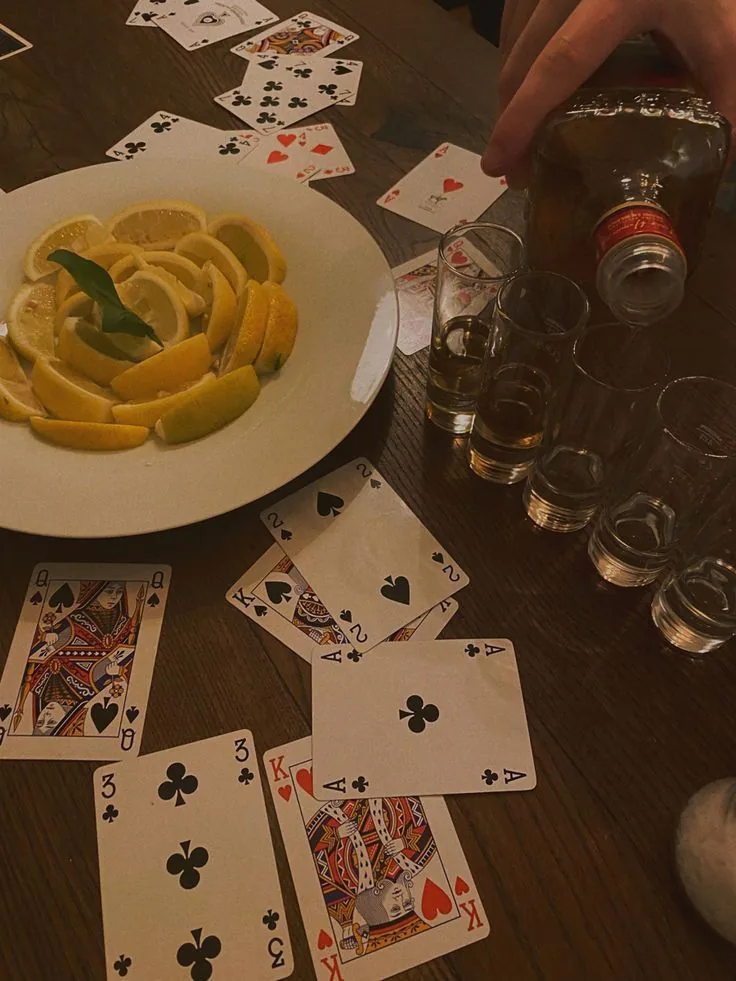
Play in 90s
Deal all cards out. Starting with Aces, players take turns laying cards face-down and announcing them (“two 3s”) — going up in rank each turn (A, 2, 3, 4…). You can lie about what you played. Anyone can call “BS!” — flip the cards: if the player lied, they take the pile; if they told the truth, the caller takes it. First to empty hand wins.
BS is a card game pretending to be a card game. The cards barely matter. What matters is whether you can hold a face when you’re telling the truth, and whether you can hold the same face when you’re lying. Played right, BS is less a game than a low-stakes character study — you learn things about your friends in a round of BS that you wouldn’t learn in a year of normal conversation.
What you need
A standard 52-card deck. Three to six players. A table where you can see everyone’s face clearly. Bad lighting hurts the game; soft lamp light is ideal.
Setup
Deal the entire deck out, going clockwise. Some players will end up with one more card than others; that’s fine. Players sort their hands by rank but keep them concealed.
How to play
Calling ranks in order
The player to the dealer’s left starts by playing one to four cards face down in the middle and announcing them as aces (e.g. “three aces”). The next player must play one to four cards announced as 2s. The next, 3s. Then 4s, 5s, and so on through the deck, looping back to aces after kings.
You don’t have to be telling the truth
Whatever rank it’s your turn to play, you must announce that rank — but you can play any cards you like face down. If it’s your turn to play 7s and you have no 7s, you have to lie. If you have four 7s, you can still lie and save them for later. The whole game is in the gap between what you say and what you played.
Calling BS
Any player, at any time after a play, can call “BS” on the player who just played. Flip the cards over. If the player was lying — even one card off — they take the entire discard pile into their hand. If the player was telling the truth, the caller takes the entire pile. Either way, play continues from the next player in sequence.
Sequence resumes after a call
After a BS call resolves, play continues with the next rank in the cycle from the player to the left of whoever played last. So a BS call doesn’t reset the rank — it just shifts the pile.
How you win
The first player to play all their cards wins. Final play is special — even if no one calls BS, the player has to flip their last play face up to prove they weren’t lying. If they were lying, they take the pile back and play continues. If they were telling the truth, they’re out.
Common variations
Sequential BS
Instead of cycling through ranks, the player calls any rank they like, but each subsequent player must call a rank one higher or lower than the previous. Adds another layer of choice; some groups prefer it.
No-look BS
Players can’t sort their hand. Plays have to be made from a fixed concealed order. Brutal. Very funny in groups that already play well.
Strategy
- Lie early. Lying late, when there are five cards on the pile, costs more if you’re caught. Lying when the pile is small is cheap.
- Lie when you legitimately have the rank too. The best lies are mixed plays — three real 7s and one 9 announced as “four 7s.” Anyone who calls only sees real 7s if they pick from the top.
- Watch hand size, not faces. The player about to win is the one to call BS on, even if you’re not sure they’re lying. The cost of a wrong call is small; the cost of letting them win is the game.
- Don’t over-call. Calling BS on every turn marks you as paranoid and players will play around you.
When to pull it out
Quiet rooms with sharp eyes. Works in groups that already know each other — strangers don’t bluff well. Excellent four-player game.
Origin
BS is a 20th-century American game, descended from a longer European tradition of bluffing card games (notably I Doubt It and Verish’ Ne Verish’, the Russian original). The polite name “I Doubt It” was the standard until somewhere in the 1960s — kids switched to BS and the game has been called that ever since.
Also in the tin